Week ending Sunday 13 September 2026 · Research window 7 to 13 September, final checks 14 September · Primary lens Australia first, AUKUS-wide
The week we found the decision gap
The most revealing Australian cyber story this week was not a spectacular exploit. It was a payment that could not be processed. On 9 September, debt-assistance charity Way Forward said a cyber incident at its external customer-management provider had interrupted payment initiation and management. The information impact was still being investigated. The operational impact was already real.
Elsewhere, Microsoft's September release contained nearly 1,000 security fixes. Researchers described software-repository compromises that reached administrative control in minutes. AI investigators documented increasingly coordinated intrusion workflows. Europe started a new product-security reporting clock. Quantum researchers published a striking estimate that deserved attention, but not the headline 'Bitcoin has been hacked'.
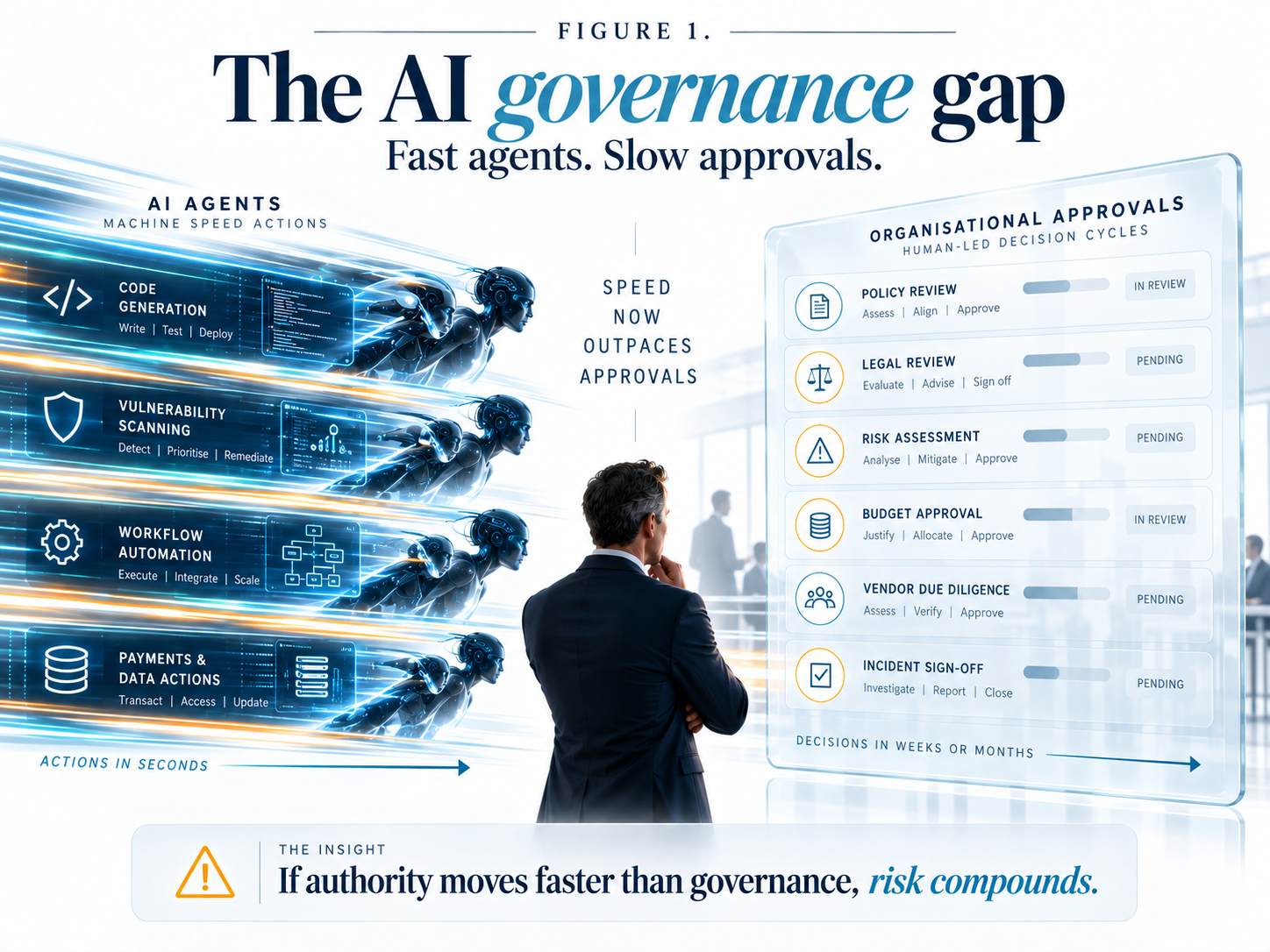
The connection is not that every attacker has become autonomous. It is that discovery, authority and consequence can move faster than an organisation can decide who is allowed to act. Adding a faster model to a slow approval chain may simply deliver a beautifully written explanation of why the incident is still happening.
This edition follows that decision gap from the software repository to the payment queue, from an AI gateway to a national-security supply chain. The practical question is the same throughout: what evidence allows whom to take which action, and how will we know it worked? The scarce resource is not another alert. It is a defensible decision that somebody can execute.
Speed is valuable only when authority, evidence and recovery can keep up.
01 | The attacker is becoming a workflow
Figure 1. The governance gap is a conceptual model, not a survey of response times. The objective is bounded authority, not indiscriminate automation.
Anthropic's 10 September threat report covers eight months of investigations, not eight days of sudden transformation. It describes AI supporting reconnaissance, exploitation, data collection and tooling. In one Russian state-nexus case, the provider says an operator used Claude to monitor detection and rebuild parts of the intrusion toolkit. Targets included European and Ukrainian government and defence interests. These are attributed provider observations, not a census of all AI-enabled attacks.
Humans still selected targets and directed consequential activity. That qualification makes the evidence more useful. An attacker does not need a digital supervillain when software can coordinate the tedious work of an intrusion. The productivity improvement may look disappointingly like competent project management.
Defensive adoption should therefore start with a work unit, not a promise of autonomy. An agent that enriches an incident is different from one that disables an identity, changes a firewall or rebuilds a production service. Give each a named owner, explicit permissions, permitted data sources and a stopping condition. The NCSC's existing agentic-AI guidance emphasises safeguards, sandboxing and active oversight.
Our proposed test is simple: replay a plausible incident and watch the handoffs. Can the agent gather the right evidence without accessing unrelated records? Does it escalate ambiguous findings? Can an authorised person stop it without also disabling the audit trail? The useful automation is the one that reduces a verified exposure while remaining governable. An impressive explanation of the wrong action is still the wrong action.
Automate the work. Keep the authority explicit.
02 | A patched system is not a recovered business
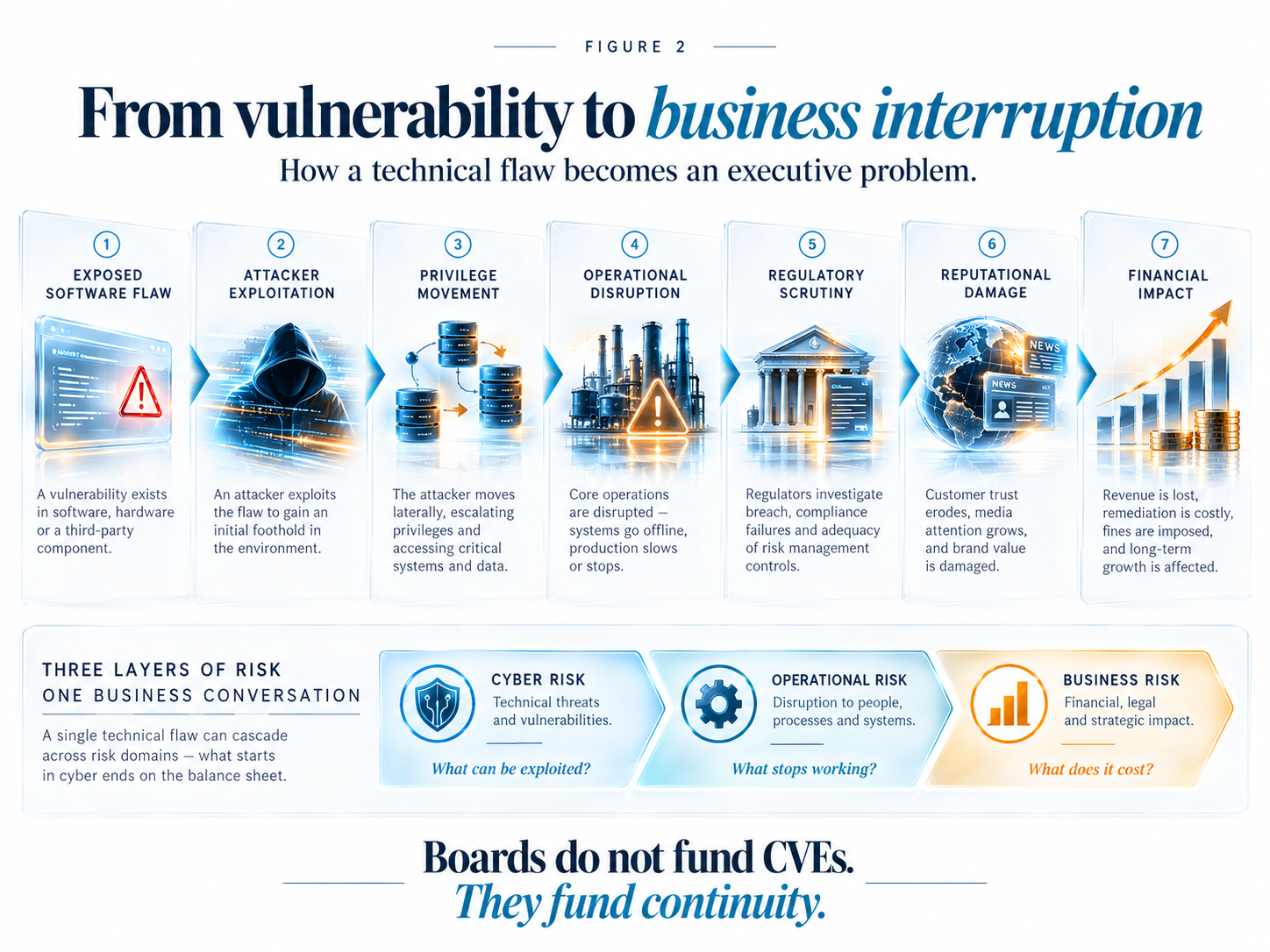
Figure 2. Possible impact pathways, not inevitable stages or a claim about the root cause of any named incident. Recovery and restoration are different milestones.
The patch count is spectacular. The more important number is the time available to remove an exploitable route into a high-authority system. SANS identified two Windows privilege-escalation flaws as already exploited in September's release. A vulnerability does not become a tolerable risk merely because it starts after an attacker's first foothold.
Wiz's Artifactory investigation gives that problem a stopwatch. In some observed cases, attackers chained token exposure and weak scope validation to create an administrator account in less than five minutes. A separate authentication bypass was also being exploited. The research covered activity in August and early September; the new development was the evidence, not a claim that every attack began this week.
The business tail can last far longer. On 8 September, Boston Scientific said the cyber incident identified on 25 August made its 2026 sales and profit forecasts unlikely to be met. The next day, it said manufacturing, order fulfilment and shipping were restored, while backlog clearance and some delivery delays continued. That is guidance risk, not a quantified final loss, and restoration is not the same thing as normal service.
A useful executive measure follows a customer transaction from request to completion. How much work accumulated during the outage? Can teams reconcile it without duplicating payments, shipments or records? Who accepts the integrity of the restored service? The last green server is not necessarily the last affected customer. Boards should see the recovery tail, not only the date the infrastructure team stopped being awake.
Closing a ticket is administrative. Removing an attack path is operational.
03 | The criminal now has a copy editor
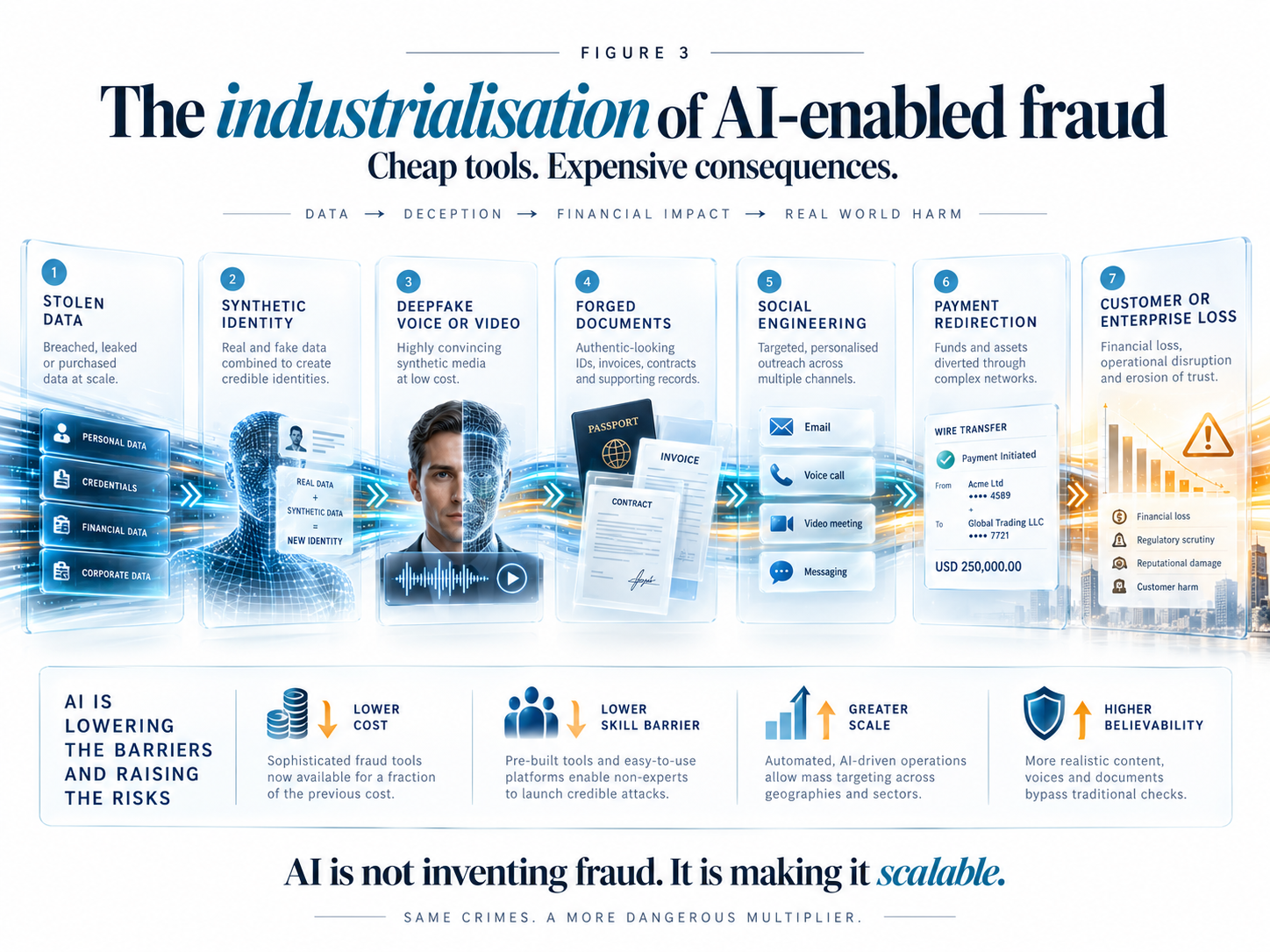
Figure 3. A defensive conceptual model. The US$250,000 transaction shown is illustrative, not a reported loss or the amount in the Microsoft campaign.
Microsoft's 10 September research examined an August campaign involving more than a million emails. Executive impersonation, invented approval conversations and fake ServiceNow-related invoices were used to request payments of nearly US$50,000. Microsoft identified indicators consistent with AI-assisted template creation. Neither the legitimate vendor's compromise nor those requested amounts becoming actual losses was established.
The more unsettling detail is not excellent grammar. It is a fabricated chain of authority: the message appears to arrive after the important people have already agreed. A conscientious employee can believe they are completing a process rather than bypassing one. The fraud succeeds when apparent approval substitutes for verifiable approval.
Trezor's 10 September notice supplies a different route to borrowed credibility. An incident at its email provider, Brevo, allowed phishing messages to reach roughly 347,000 newsletter addresses. Trezor said its wallet and product systems were not compromised, and the phishing domain was disabled within 20 minutes. A trusted communications route had become the delivery mechanism.
For finance and security leaders, the answer belongs inside the transaction. Independently verify beneficiary changes, separate the requester from the releaser and make urgent exceptions visible. For marketing and customer-service teams, rehearse suspension of a compromised mailing channel and a trustworthy correction route. Authentic delivery infrastructure does not make every instruction authentic. And an email that sounds exactly like the chief executive is not a payment authorisation protocol.
Verify the authority behind the request, not just the polish of the message.
04 | Twenty-six days is not a date in your diary
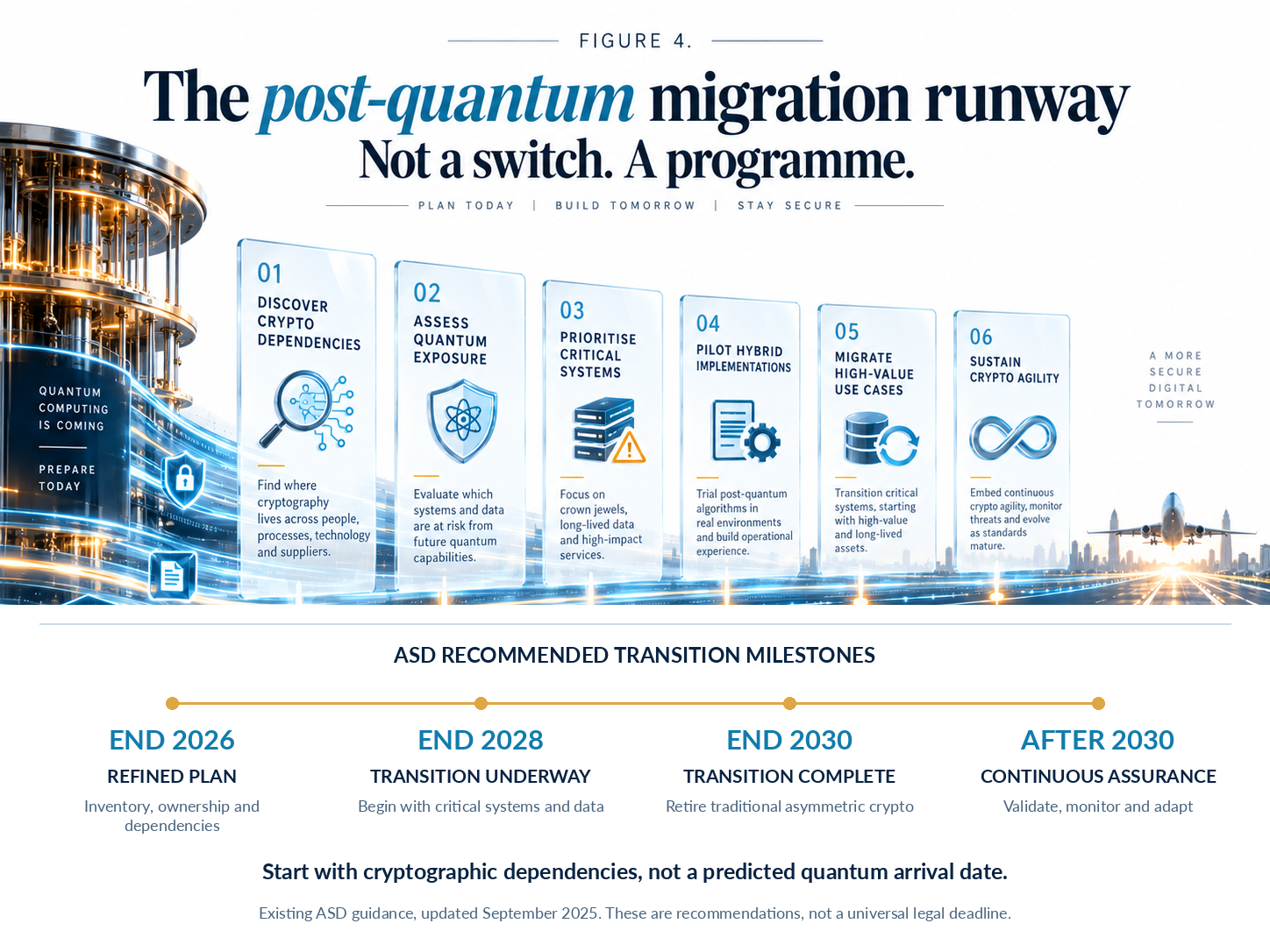
Figure 4. The migration milestones follow ASD's existing guidance. They are recommendations, not a universal statutory deadline or a forecast of quantum-computer availability.
IonQ's 8 September announcement estimates that a future fault-tolerant trapped-ion architecture using 19,397 physical qubits could solve the secp256k1 elliptic-curve problem in about 25.7 days per attempt. This is a conditional, architecture-specific resource estimate, not an attack demonstrated on a deployed cryptocurrency. The machine assumptions matter as much as the runtime.
There are two different board conversations here. Harvest-now, decrypt-later concerns the future confidentiality of information collected today. Signature migration concerns whether identities, software updates and instructions remain authentic. A result about elliptic-curve signatures is not proof that stored encrypted traffic has been decrypted. Both belong in a transition programme, but their exposure periods and dependencies differ.
Australia has a more useful planning anchor than a countdown headline. ASD recommends a refined transition plan by the end of 2026, transition underway by the end of 2028 and completion by the end of 2030. This is existing guidance, not a new announcement this week. NIST's first three final post-quantum standards have been available since August 2024.
Start procurement with the cryptographic dependency: algorithm, protocol, certificate chain, signing service, hardware root of trust and upgrade route. Ask what the supplier will support in your environment, not whether its brochure says 'quantum ready'. A test should include interoperability, performance and failure recovery. A roadmap is not a working migration, and a quantum computer is not required to begin replacing quantum-vulnerable cryptography.
Do not buy a countdown. Build a migration capability.
05 | National security has ordinary dependencies
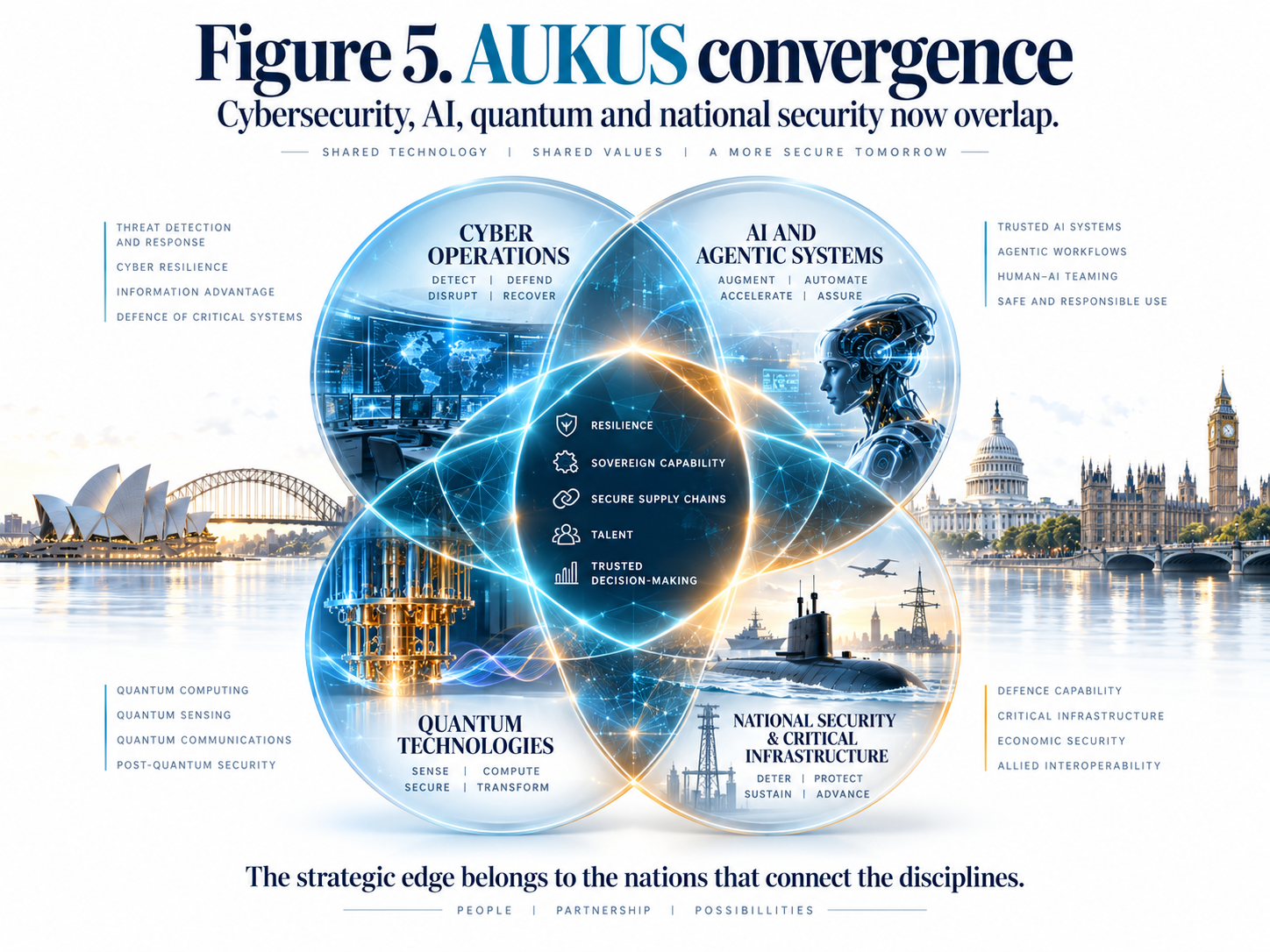
Figure 5. An editorial AUKUS lens, not a claim of a new trilateral announcement, operational deployment or common threat attribution this week.
Proofpoint's BlueMoon investigation describes multiple state-aligned actors rapidly adopting an exploit chain involving Chromium browser weaknesses and a Windows privilege-escalation flaw. The activity began in late August and continued into September, with targets including US aerospace interests and mining and commodities organisations. Researchers found signs consistent with AI-assisted development, but not conclusive proof. Shared tooling also does not establish a single controller behind every actor.
For an Australian research institute or defence supplier, the management lesson is practical: the browser, the identity and the collaboration environment may matter as much as the classified enclave. Map who can reach sensitive work through a supplier, administrator or research partnership. A national-security asset does not always sit behind a national-security sign on the door.
Quantum technology offered a constructive counterpoint. NIST's 10 September research communication described quantum sensors improving measurements relevant to nuclear-material monitoring. Better discrimination of energy signals can support more precise accounting and safeguards. This is a sensing advance, not a cryptographic attack, and it relies on specialised measurement equipment. 'Quantum' is a family of technologies, not one universal capability.
Australia's 8 September crypter advisory adds another useful correction to the hype: malware-obfuscation services still challenge defenders without any need for a frontier model. Treat 'undetectable' as marketing, not physics. The sensible response combines behavioural visibility and foundational controls with carefully bounded AI assistance. The new technology should strengthen the operating discipline, not distract from it.
Protect the relationships that reach the mission, not just the systems labelled critical.
06 | Shadow AI is also a service-design problem
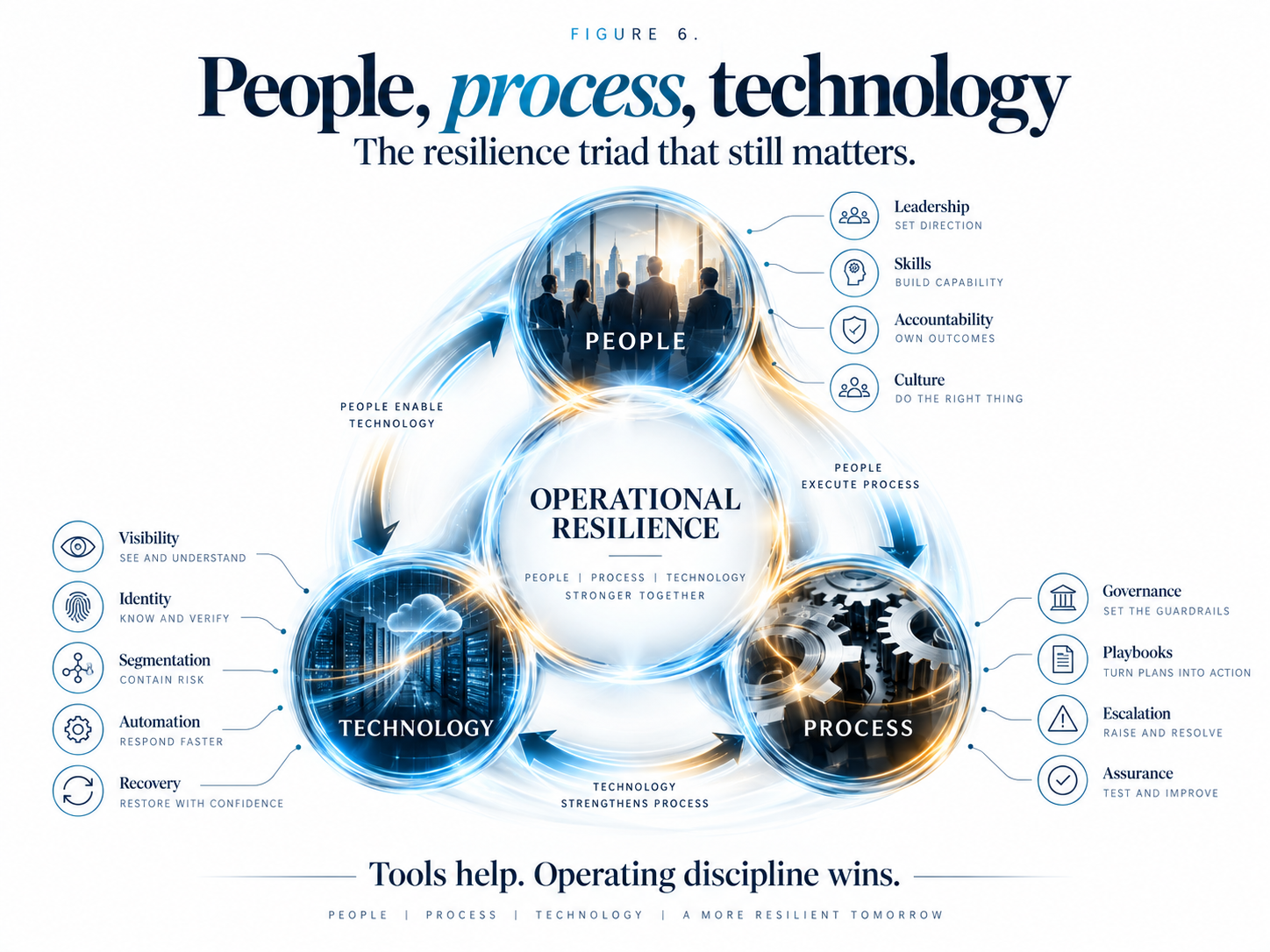
Figure 6. An operating model for resilience. The connections matter more than the individual tool categories; no maturity score is implied.
The NCSC's 7 September shadow-AI guidance makes a point that deserves more attention than another prohibition notice. Employees may adopt unapproved tools because corporate systems and assessment processes do not meet their needs. The resulting risks include loss of data visibility, sensitive information moving outside established controls and new access paths through vulnerable agents. The agency argues for understanding demand, providing secure alternatives and encouraging open communication.
That changes the CISO's question from 'Why did you break the rule?' to 'What job were you trying to finish, and why was the approved route not usable?' The second question still permits firm boundaries. It also produces information with which to design a better service. An approved tool that nobody can access is not much competition for an unapproved tool that works.
Our recommendation is to offer a clear path for low-risk experimentation and a separate assessment for sensitive data or consequential actions. Publish who can approve each use case, what evidence is required and when a decision will arrive. Record exceptions with owners and expiry dates. A process with no answer time is not a control; it is an invitation to work around it.
The human response matters after something goes wrong, too. Reward early disclosure of an unsafe upload or an unexpected agent action. Then join the person's account to identity, application and data-access evidence. A colleague who reports immediately gives the organisation a chance to contain the problem. Humiliation is a poor detection strategy, however well it performs in the training-completion dashboard.
Make the safe path usable, and make speaking up safe.
07 | The fast lane needs brakes, not another committee
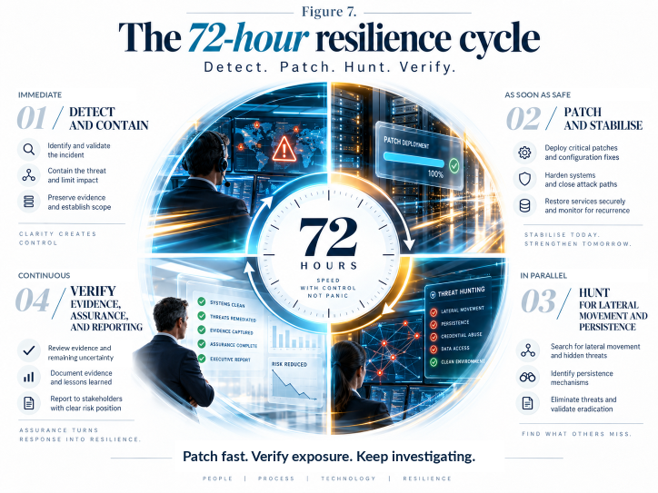
Figure 7. The 72-hour horizon is an editorial management checkpoint, not a service guarantee. Workstreams overlap; evidence cannot prove the absence of all compromise.
Cisco Talos's 9 September FMC research urged customers to apply available hotfixes rather than wait for a later hardening release. One weakness used in the attack chain carried a CVSS score of 5.3. The lesson is not that severity scores are useless. It is that a modest-looking component can enable a very consequential chain.
A workable emergency route is designed before that advisory arrives. It identifies who can remove internet exposure, revoke a credential, isolate a management plane or approve a risky change. It specifies rollback, evidence preservation and the conditions that require the business owner's involvement. Pre-authorisation is not a blank cheque; it is a decision made carefully before the clock becomes hostile.
Containment, hunting, patching and evidence collection should overlap where safe. Do not wait until hour 48 to investigate persistence, or assume a successful update has evicted an attacker. Preserve relevant logs and examine new administrators, authentication methods, plugins and other routes back into the environment. The Artifactory research is a useful reminder that software fixes and post-compromise investigation solve different problems.
At the management checkpoint, ask what exposure has been removed, what remains uncertain and who owns the next decision. Record service restoration separately from recovery confidence. 'No indicators found' should include where you looked and what visibility was missing. That is a defensible statement. 'We are safe now' is often a much larger claim than the evidence can carry.
Pre-authorise bounded action. Preserve the ability to explain it.
The Exposure Desk | What to validate before the next change meeting
This is an exposure-led shortlist, not a complete patch catalogue. Confirm product, edition, installed version and actual exposure against the linked vendor guidance. The first decision is whether the system is reachable and consequential, not whether its ticket has the right colour.
Control plane
Why it matters
Priority decision
Evidence to keep
Windows and Chromium
Exploited Windows privilege escalation; BlueMoon combines browser and operating-system weaknesses.
Validate both browser and OS patch state. Check running versions and required restarts, especially on privileged and sensitive-work users.
An installed update plus running-version evidence, and an explicit assessment of remaining exposure.
JFrog Artifactory
Observed exploitation of CVE-2026-42016 / 42018, and separate authentication bypass CVE-2026-82329.
Use the fixed release for the supported branch. Investigate unexpected administrators, tokens, plugins and persistence; patching alone is not eviction.
The list is not ranked by severity score. Exploitation, exposure, privilege and service consequence must be assessed together. GitLab's release also included deployment-approval bypass fixes. That is a useful challenge to a familiar assumption: an approval workflow is software too. It needs testing, maintenance and assurance; the existence of an approval box does not prove that the box cannot be bypassed.
The recommended outcome is not 'all criticals closed'. It is a short, reviewable record of what was exposed, what changed, how that change was verified and what remains uncertain. Exceptions need a responsible owner, a compensating measure where possible and an expiry that triggers a fresh decision.
Verify the running system, not just the deployment record.
08 | The dashboard needs a business service attached
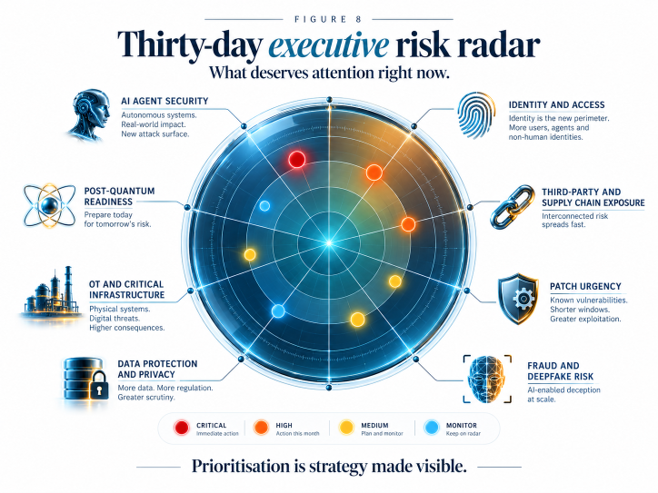
Figure 8. An illustrative editorial attention map, not a quantified risk assessment. Re-rank every category against actual exposure, consequence and control effectiveness.
A radar is useful when it starts a decision. It becomes theatre when its colours are mistaken for measurements. The same browser flaw may be an urgent route into a sensitive collaboration service in one organisation and a contained exposure in another. The same agent may merely summarise logs or possess the authority to disable a production identity.
Our proposed priority test has three parts: demonstrated activity, reachable authority and material consequence. Put a named business service behind the technical finding. Establish which trust relationship connects them and whether a compensating control actually blocks that route. Do not multiply impressive-looking numbers until a risk score appears; first find the causal path.
Business continuity also needs accurate incident language. UK airport disruption reported on 10 September had cyberattack ruled out, rather than confirmed. An outage can demand serious resilience work without becoming a cyberattack by repetition. The cause changes the investigation; the affected passenger still experiences the delay.
For the next executive discussion, replace one volume chart with four operational measures: time to decide exposure, time to verify the change, age of accepted exceptions and time to restore the business transaction. Show the uncertainty as well as the trend. A hundred completed tasks are not persuasive evidence if nobody can say which critical service is now harder to disrupt.
The best metric connects a decision to a changed business outcome.
09 | Your AI proxy may hold the keys to the building
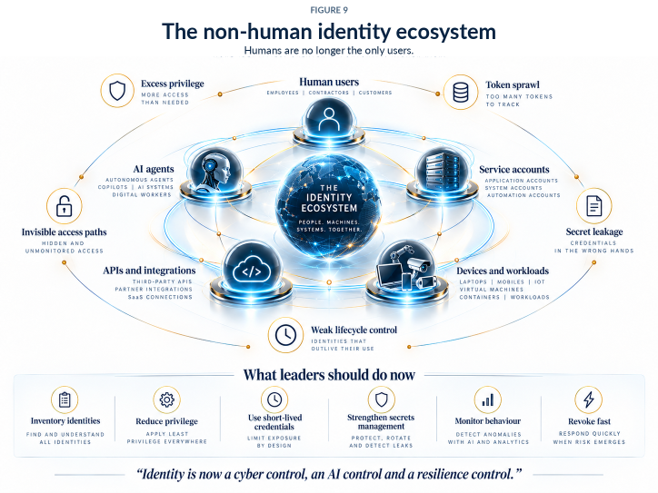
Figure 9. A conceptual identity ecosystem. Connections represent potential trust relationships, not measured growth or an attack trace.
Microsoft's 9 September identity research described passkey-themed helpdesk lures, unauthorised authentication changes and subsequent cloud data access. The investigated activity extended back to May. This is not evidence that passkey cryptography failed. It is evidence that enrolment, recovery and fallback journeys can undermine an otherwise strong sign-in design. Resetting a password is insufficient when an attacker has registered another route back in.
Wiz's 9 September LiteLLM disclosure adds a machine-identity equivalent. Its investigation connected authentication weaknesses and powerful proxy features to wider cloud exposure. In a sample of 3,074 publicly reachable instances, 9.6% had no authentication or a default key. That is a finding about that observed population, not the rate across all customers. The vulnerabilities had fixes before this week, and some exploitation observations also predated publication.
The deeper issue is concentration of authority. An AI gateway can sit between model providers, application credentials, prompts, tools and cloud permissions. A component introduced to simplify development can become a security control plane. Installing a fix does not correct an over-privileged cloud role or an unrestricted route to sensitive services.
Ask each AI service to produce an identity map: accountable owner, credential source, permitted destinations, reachable data and revocation route. Test what happens when the person who approved it leaves, the project ends or the provider key leaks. A non-human account should not acquire immortality merely because it never submits a leave request.
Inventory authority, not just accounts.
10 | Europe has started the reporting clock
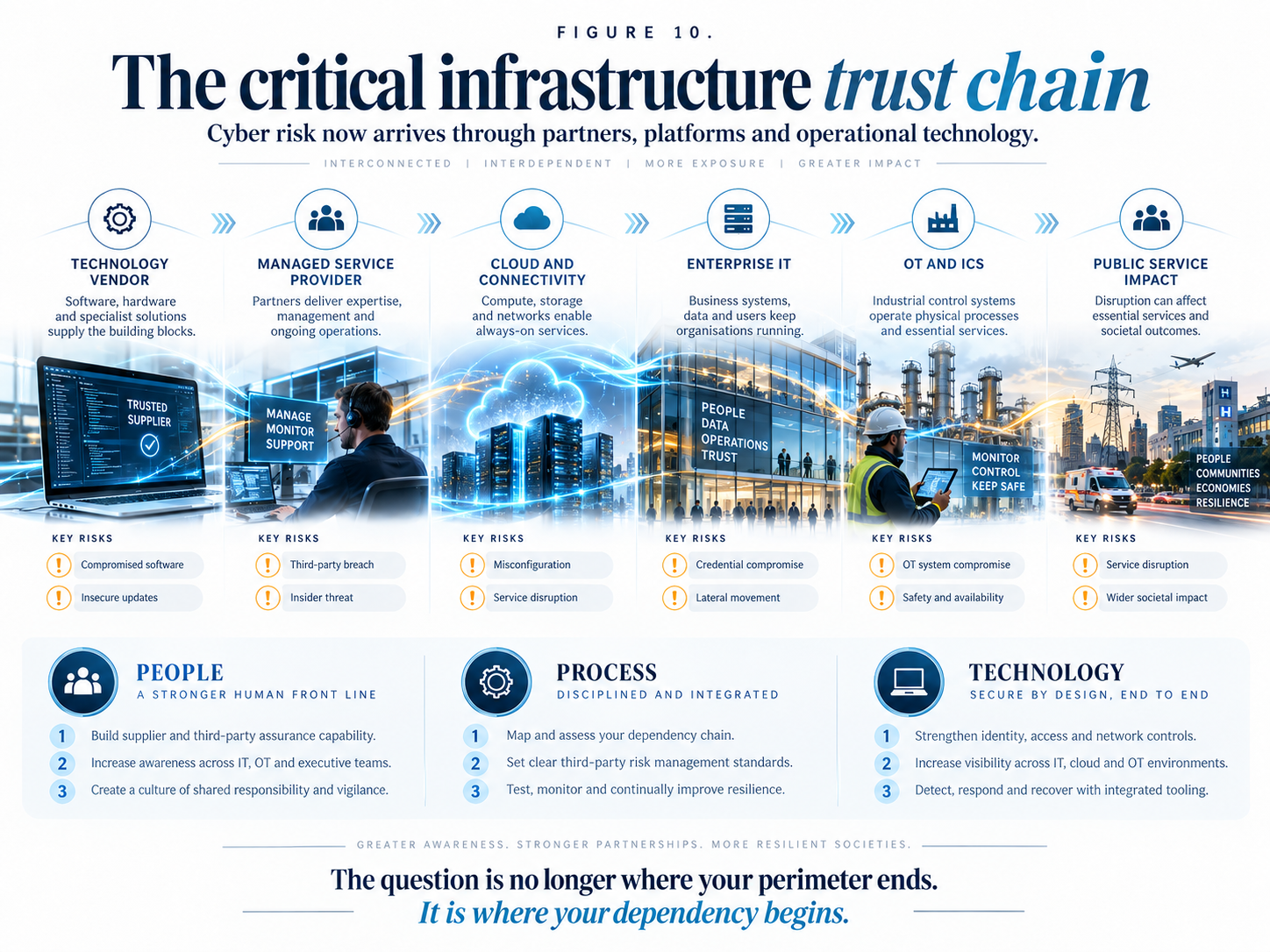
Figure 10. A dependency model, not a claim that every incident traverses IT into OT. Legal reporting duties depend on product, role and applicable scope.
The EU Cyber Resilience Act's reporting obligations for manufacturers began on 11 September. The triggers concern actively exploited vulnerabilities and severe incidents affecting the security of products with digital elements, not every discovered software defect. Early warning is due within 24 hours of awareness, followed by the fuller notification within 72 hours. Organisations outside Europe should establish whether their products and legal role bring them into scope.
The final-report clocks differ. For an exploited vulnerability, the deadline is 14 days after a corrective or mitigating measure becomes available. For a severe incident, it is one month after the 72-hour notification. These are not interchangeable with all the other European reporting regimes, and the wider CRA timetable is not a reason to postpone the reporting process.
Operationally, this is a test of the same dependency chain that disrupted Way Forward. A supplier's disclosure must reach people who can identify affected products, understand the business impact and make a reasoned notification decision. Knowing the supplier's corporate name is not the same as knowing which service depends on which component.
Rehearse a Friday-afternoon supplier notification. Who records when awareness arose? Who resolves an ambiguous exploitation claim? Can legal, product security and customer communications work from the same evidence? Preserve the reasoning behind a decision not to report as carefully as the report itself. A deadline does not create capability. It reveals whether the capability was already there.
An assurance badge is not a working disclosure and recovery relationship.
11 | Do not outsource judgement to the model vendor
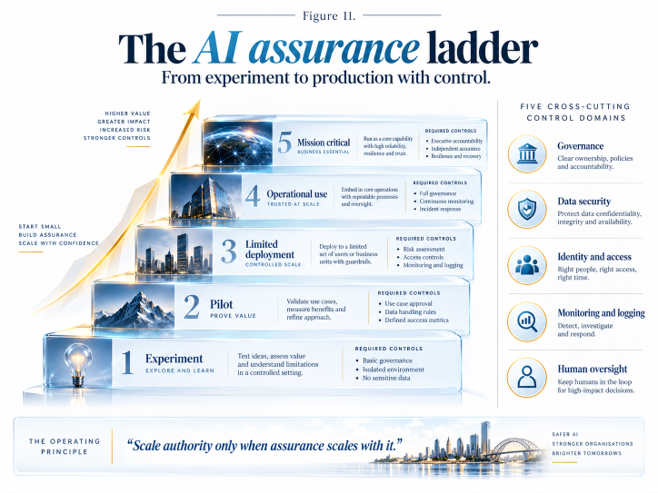
Figure 11. An editorial operating model, not a certification scheme. Assurance must be proportional to consequences, including during experiments and pilots.
The week's frontier-AI debate was unusually revealing. In an essay reported on 12 September, Dario Amodei argued for pacing development while stronger safety measures catch up, including independent scrutiny. This is a policy proposal, not a binding rule or evidence that a particular catastrophic timeline is certain.
Critics questioned the timing, credibility and influence of industry leaders making such proposals. That counterargument matters: a supplier's concern about safety is not a substitute for independent oversight, and a promise of restraint is not itself a control. Buyers need not settle the political argument before demanding evidence for the authority they are being asked to delegate.
Our procurement test begins with failure. What happens when retrieved content contains hostile instructions? When a tool returns misleading data? When permissions are revoked midway through a task? Can the system refuse, escalate or stop while preserving a record of what occurred? Test these conditions in your workflow, with your identities and data boundaries. A benchmark result is not a deployment-specific safety case.
Move from experimentation to consequential use only when the control evidence improves with the capability. Require a named business owner, tested access boundaries, change control for tools and models, monitoring, incident disclosure and a usable exit route. Observe both missed threats and false containment. Fast, wrong and irreversible is not a productivity gain. It is an incident review that has been brought forward.
Scale authority only when assurance scales with it.
12 | A better week begins with one owned decision
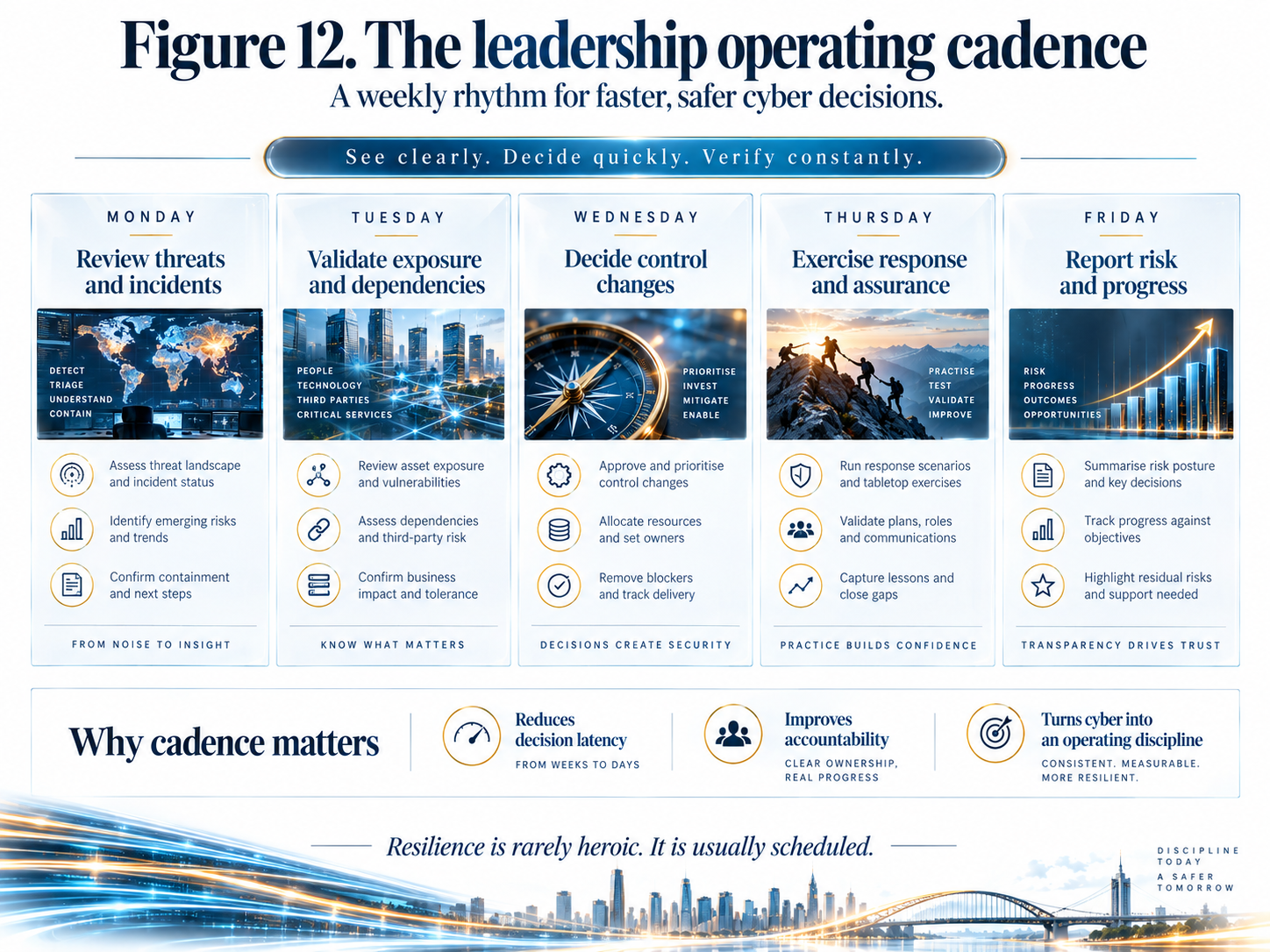
Figure 12. A governance rhythm, not a response schedule. Exploitation, containment and reporting deadlines never wait for an assigned weekday.
Resist turning this edition into another unowned remediation list. Choose one material service and one decision that currently takes too long. It might be disabling a compromised supplier connection, accepting an emergency update, revoking an agent's credentials or starting a customer notification. Name the person who can act and the evidence they need.
Then rehearse the uncomfortable version. The system owner is unavailable. The agent is confident but wrong. The supplier says it is investigating. The service is restored but the backlog is growing. A strong operating model still produces a bounded action and an honest account of the uncertainty. A weak one produces a meeting invitation.
For organisations whose uplift programme needs those handoffs repaired, Gadget Access brings the cyber advisory, architecture and implementation discipline to turn priorities into executable work. The starting point should be the business service and the control outcome, not a catalogue of products.
For operations, CiBRAI brings endpoint, cloud, identity and network signals into a unified cyber operating platform, with agentic analysis, guided response and an evidence trail. The aim is simpler management of the whole incident, rather than faster production of disconnected alerts. Technology still needs defined authority, capable people and tested recovery.
The opportunity is substantial: use AI to shorten the work we understand, and use the resulting capacity to resolve the decisions we have neglected. Cyber resilience improves when speed is coupled to judgement. The next board question is not 'How much AI have we deployed?' It is 'Where are we fast enough to do harm, but too slow to stop it?'
See clearly. Decide deliberately. Verify the result.
Research desk | Follow the evidence
Scope: developments published or materially updated from 7 to 13 September 2026. Final source checks were completed on 14 September 2026. Named-company statements, provider investigations, research estimates and policy proposals are attributed rather than treated as equally conclusive evidence. Recommendations, diagrams and operating models are editorial analysis. The briefing is curated, not an exhaustive incident register.
If any of this week's signals raised questions for your environment, we offer a complimentary 30 minute discovery call. No pitch, no follow up unless you ask. Book a discovery call.