

Controlled Role and Attribute-Based (CRAB) Access Control: A New Paradigm for Zero Trust Architectures

Controlled Role and Attribute-Based (CRAB) Access Control: A New Paradigm for Zero Trust Architectures Abstract This paper introduces Controlled Role and Attribute-Based Access (CRAB), a novel access control model designed explicitly for contemporary Zero Trust architectures. Recognizing the inherent limitations of traditional Role-Based Access Control (RBAC) and Attribute-Based Access Control (ABAC) in managing the complex,…

SIEMLINE (Security Information Event Management Linked Intelligence & Network Enablement)

1. Introduction In today’s complex cybersecurity landscape, organizations face an escalating volume and sophistication of cyber threats. Traditional security approaches relying solely on manual incident response and rule-based detection methods are no longer sufficient to counter advanced persistent threats (APTs), sophisticated ransomware, insider threats, and zero-day exploits. To address these evolving challenges effectively, organizations worldwide…

Building Better Teamwork for Cyber Innovation

  Introduction In an era where digital threats evolve at an unprecedented pace, Australian cybersecurity teams stand as the critical line of defense against an increasingly sophisticated threat landscape. From devastating ransomware attacks targeting critical infrastructure to complex state-sponsored cyber espionage campaigns, the challenges facing these teams have never been more daunting. Yet success in…

The Era of Quantum Resilience: Preparing Australian Government Organisations for the Quantum Future

As the world hurtles toward the quantum computing revolution, Australian Government organisations face an unprecedented challenge—and opportunity—to safeguard their digital ecosystems. Quantum computing holds the promise of solving problems beyond the capabilities of classical computers, but it also poses significant threats to the cryptographic foundations of modern cybersecurity. To ensure long-term security, the concept of…

Simplifying the Essential 8 Journey with Continuous Compliance Delivery

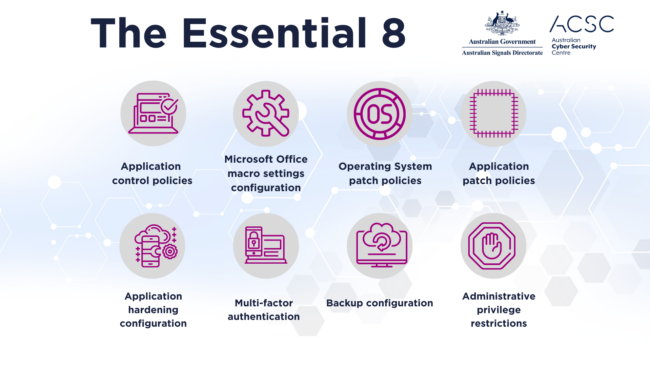
Navigating the Essential 8 (E8) maturity model can be a daunting challenge, especially for complex government organizations. The ACSC’s E8 framework provides critical guidelines for improving cyber resilience, but its implementation often trips up organizations that take a linear approach—progressing from Maturity Level 1 to 2, and finally to 3. This method, while seemingly logical,…

Australia in the Crosshairs: The Rising Threat of Hacktivist Cyber Attacks

Australia’s digital landscape faced a significant escalation in November 2024, as pro-Russian and pro-Palestinian hacktivist groups launched over 60 cyberattacks targeting key industries, from government institutions to financial services and critical infrastructure. These Distributed Denial-of-Service (DDoS) campaigns, driven by ideological and geopolitical motivations, underscore the urgent need for robust cybersecurity defenses. In this snapshot post,…

Implementing ISO 42001: A Framework for Responsible AI Governance in the Australian Government

Executive Summary The integration of artificial intelligence into government operations represents both an unprecedented opportunity and a significant responsibility. As the Australian Government increasingly adopts AI technologies to enhance public services and decision-making capabilities, the implementation of ISO/IEC 42001:2023 emerges as a critical framework for ensuring responsible and effective AI governance. This paper presents a…

AI in Cybersecurity: The Financial Case for AI-Powered SIEM Solutions

The meteoric rise of artificial intelligence (AI) in business is undeniable. A recent CNBC report highlights a staggering 500% surge in business spending on AI in 2024, reaching $13.8 billion. While much of this spending fuels transformative projects in automation and data analysis, AI’s role in cybersecurity—particularly in Security Information and Event Management (SIEM)—stands out…